Learn how to guide young children with respect, clear boundaries, and positive discipline strategies that actually work.
Positive discipline teaches children self-control, responsibility, and emotional intelligence without harsh punishments.
By using connection, clear boundaries, and natural consequences, parents can foster cooperation and respect while strengthening the parent-child bond. This approach helps children develop lifelong problem-solving skills and resilience. (1)
Key Takeaways
- Balance kindness with firmness to set clear, respectful boundaries.
- Use non-punitive discipline strategies like natural consequences and emotion coaching.
- Encourage responsibility and problem-solving to help children develop self-regulation skills.
Foundations of Positive Discipline
Balancing Kindness and Firmness
Discipline isn’t about power. It’s about direction and foundation. A child needs both kindness and firmness—one without the other creates problems. Too much kindness? That’s indulgence. Too much firmness? That’s control. The middle ground is where respect grows.
- Kindness acknowledges feelings.
- Firmness sets limits.
- Balance teaches responsibility.
A parent saying, “I know you don’t want to clean up, but it’s still your job,” is doing both. They hear the child’s frustration but keep the rule in place.
Boundaries should be clear, but not rigid. A child who’s exhausted might need help finishing a task. A child who’s angry might need a minute before following through.
What matters most? Consistency. If rules change depending on mood, kids stop taking them seriously. But when they know what’s expected—every time—they learn to respect both the boundary and the person setting it.
Understanding Child Development
Young kids don’t think like adults. Their brains are still wiring up—especially the parts controlling impulse, logic, and patience. A two-year-old throwing a fit in a store isn’t manipulative. They’re overwhelmed. A four-year-old refusing to share? That’s developmentally normal.
- Toddlers struggle with self-control.
- Preschoolers are still learning empathy.
- School-age kids need reminders, not punishments.
Expecting too much, too soon leads to frustration—for everyone. A two-year-old can’t sit still through a long dinner. A five-year-old might need help remembering to use “gentle hands.”
Instead of punishing behaviors kids aren’t ready to control, parents can teach. Short instructions work better than lectures. Showing works better than telling. Patience works better than punishment.
Growth takes time. Kids need space to learn—at their pace, not an adult’s.
The Role of Emotional Intelligence
A child’s IQ might help with school, but emotional intelligence (EQ) helps with everything else—friendships, conflicts, even handling frustration. And like any skill, it’s learned.
- Self-regulation starts with modeling.
- Empathy grows when kids feel understood.
- Social skills build through practice.
Instead of snapping, “Stop whining!” a parent might say, “I hear you. Let’s take a deep breath and figure this out.” The message? Feelings are okay. But how they’re expressed matters.
When kids learn to name emotions, they can manage them. When they manage emotions, they handle stress, change, and setbacks better.
And that makes a difference—at home, in school, and eventually, everywhere else.
Setting Boundaries & Managing Behavior
Clear & Consistent Boundaries
Kids push limits. That’s how they figure out what’s okay and what isn’t. But when rules shift daily, they don’t learn boundaries—they learn that rules don’t matter.
- Consistency builds trust.
- Clear rules prevent confusion.
- Predictability makes cooperation easier.
Vague commands like “Be good” don’t work. Instead, be specific: “Walk inside the house” or “Keep your hands to yourself.”
Enforcement has to match the rule. If bedtime is 8 p.m. on Monday, it shouldn’t be 9 p.m. on Tuesday just because they argue. Otherwise, they learn that rules bend when they push hard enough.
Kids test boundaries, but they also find comfort in them. A rule that stays the same, every time, gives them something solid to rely on. (2)
Connect Before Correct
Discipline isn’t just about rules. It’s about relationships. A child who feels heard is more likely to listen.
- Connection lowers resistance.
- Understanding makes discipline more effective.
- Feeling seen encourages cooperation.
Before correcting, connect. If a child refuses to put on shoes, instead of snapping, kneel down, meet their eyes, and say, “You really don’t want to wear them, huh?” That small moment of recognition can shift their response.
Sometimes, kids act out because they feel ignored. Addressing that need—before enforcing a rule—reduces power struggles.
Rules matter. But how they’re delivered? That matters just as much.
Natural & Logical Consequences
Punishment forces obedience. Consequences teach responsibility. The difference? One demands compliance. The other helps kids connect actions to outcomes.
- Natural consequences happen on their own.
- Logical consequences are enforced but related.
- Random punishments don’t teach—they just control.
A child who won’t wear a coat? They feel cold. That’s a natural consequence. No lecture needed.
A child who draws on the wall? They help clean it. That’s a logical consequence. The action and the outcome match.
But making a kid scrub the whole bathroom for a minor mistake? That’s just punishment. The lesson gets lost in resentment.
The goal isn’t control—it’s learning. And consequences that make sense? Those actually stick.
Effective Discipline Strategies
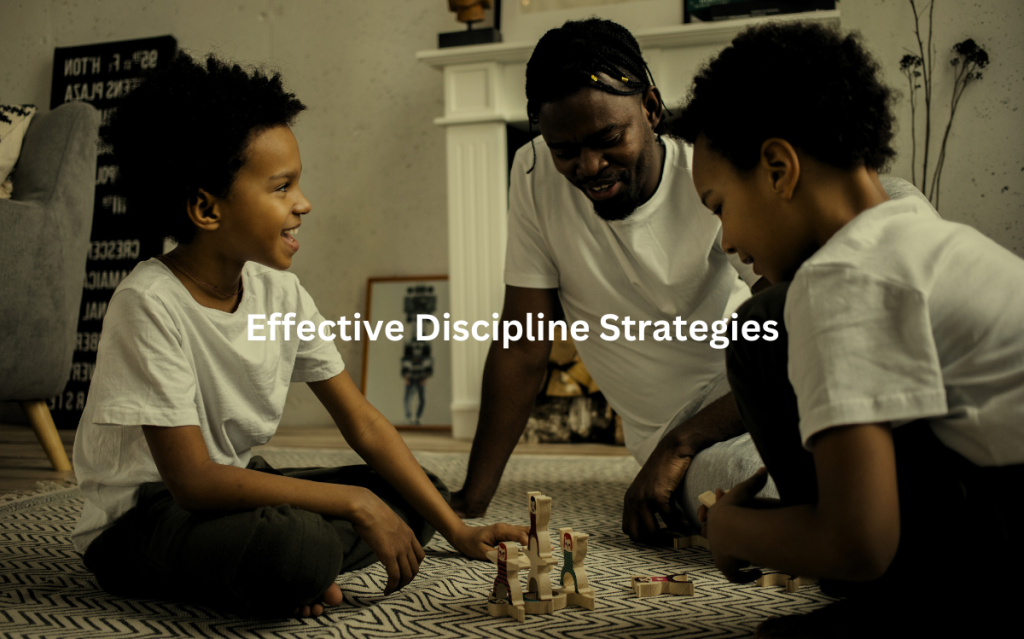
Time-In vs. Time-Out
Traditional time-outs push kids away. That’s the problem. Isolation doesn’t teach regulation—it just leaves them alone with big feelings.
Time-ins do the opposite. Instead of sending a child to their room, keep them close. Sit together in a quiet spot and say, “Let’s take a break and breathe.”
- Teaches self-soothing, not shame.
- Helps kids calm down, not bottle up.
- Keeps connection instead of breaking it.
Some kids need space, sure. But most just need help navigating frustration. A time-in gives them that, without making emotions feel like something to be punished.
Emotion Coaching
Big emotions overwhelm kids. Meltdowns happen because they don’t have the tools—yet. That’s where coaching comes in.
- Label emotions: “You’re frustrated because your tower fell.”
- Validate feelings: “That was really hard, huh?”
- Offer solutions: “Want to try again or take a break?”
This helps kids understand what they’re feeling instead of getting lost in it. Over time, they start managing emotions on their own. No yelling. No punishments. Just learning.
Behavior Management Without Punishment
Punishment stops behavior. But stopping isn’t the same as learning.
A kid who gets yelled at for hitting? They stop because they’re scared. A kid who learns why hitting isn’t okay? They stop because they understand.
- Replace “Stop that!” with: “Hands are for helping.”
- Offer choices: “Do you want to use words or take space?”
- Encourage problem-solving instead of fear.
Punishment forces obedience. Teaching builds skills. And the goal isn’t just to stop bad behavior—it’s to help kids make better choices next time.
Encouragement & Positive Reinforcement
Encouragement vs. Praise
Praise is about results. Encouragement is about effort. That difference shapes how kids see themselves.
A child who hears, “You’re so smart!” might start avoiding hard tasks to protect their “smart” label. But one who hears, “You worked really hard on that!” learns that effort leads to success.
- Praise is outcome-based: “Great drawing!”
- Encouragement highlights effort: “You kept trying until you got it right.”
Over time, encouragement builds resilience. Kids see mistakes as part of learning, not something to fear. Instead of seeking approval, they focus on progress. And that’s how confidence grows.
Growth Mindset in Discipline
Mistakes are part of learning. Kids who believe they can improve don’t get discouraged—they adapt.
Instead of, “You spilled again—so careless!” try, “Spills happen. What can we do next time?” That small change in wording makes a big difference. It shifts focus from failure to learning.
- Normalizes mistakes.
- Teaches problem-solving.
- Reinforces that effort matters more than perfection.
Discipline shouldn’t be about catching errors. It should be about helping kids handle setbacks, so they keep trying—even when things get tough.
Building Confidence & Resilience
Confidence doesn’t come from praise. It comes from experience—especially overcoming small challenges.
- Give choices: “Red shirt or blue?”
- Allow small risks: Let them pour their own milk, even if they spill.
- Encourage independence: “Would you like to try tying your shoes?”
Struggle (in the right amount) builds resilience. When kids solve problems on their own, they learn they’re capable. Shielding them from failure doesn’t help. Letting them figure things out does.
Communication & Conflict Resolution
Active Listening & Empathy
Kids don’t always need a solution—sometimes, they just need to feel understood.
Active listening builds trust. Instead of dismissing emotions (“You’re fine”), reflect them: “You’re upset because I took the toy.” Simple, but effective.
- Repeat what they say: It shows they’re heard.
- Validate feelings: “It’s okay to be mad.”
- Ask open-ended questions: “Want to tell me more?”
Resisting the urge to correct right away makes kids more open to guidance. When they feel seen, they listen better. And over time, they learn to name emotions rather than act them out.
Problem-Solving & Responsibility
Kids grow when they help solve problems—not when adults fix everything for them.
A child refusing to share? Instead of stepping in, ask, “How can we take turns?” This gives them ownership of the solution.
- Ask guiding questions: “What’s fair for both of you?”
- Let them brainstorm: Their ideas might surprise you.
- Encourage follow-through: “Great plan—let’s try it.”
Responsibility isn’t something kids just wake up with. It’s built, one decision at a time.
Handling Sibling Rivalry & Power Struggles
Siblings fight. That’s reality. The goal isn’t to stop conflicts—it’s to teach them how to handle them.
Instead of being the judge, coach them through it. “I see two kids who want the same toy. What’s a fair way to solve this?”
- Let them state their sides.
- Help them find solutions.
- Only step in when needed.
Over time, they’ll stop running to adults for every dispute. They’ll learn to negotiate, compromise, and work things out—skills they’ll use long after childhood.
Managing Common Discipline Challenges
Temper Tantrums & Emotional Outbursts
Tantrums aren’t about control—they’re about overload. A child’s brain isn’t fully developed (the prefrontal cortex, which regulates emotions, isn’t mature until around 25). When emotions flood in, logic goes out.
The best response? Stay calm. A dysregulated adult can’t calm a dysregulated child.
- Keep words minimal: “You’re upset. I’m here.”
- Stay close, but don’t overwhelm.
- After they settle, help label feelings: “You were frustrated because you couldn’t reach your toy.”
Teaching emotional regulation happens after—not during—a meltdown. The goal isn’t to stop tantrums entirely (they’re developmentally normal) but to help kids recover faster.
Defiant & Attention-Seeking Behavior
Defiance isn’t always about testing limits. Sometimes, it’s unmet needs in disguise.
Before reacting, ask:
- Is the child seeking connection?
- Are they hungry, tired, or overstimulated?
- Do they need more autonomy?
If a child constantly resists, they might be craving control. Offer choices: “Do you want to clean up now or after one more game?” Giving small decisions prevents power struggles.
Not all attention-seeking is bad—kids need connection to feel secure. A little positive attention upfront can prevent negative attention-seeking later.
Preventing Misbehavior Before It Starts
Most misbehavior isn’t random—it’s predictable. When kids know what’s coming, they resist less.
Set them up for success:
- Give transition warnings: “Five minutes until we leave.”
- Offer choices: “Blue shirt or red?”
- Keep expectations clear: “Toys stay outside.”
Kids thrive on routine. Surprises (especially unwelcome ones) trigger pushback. If a child melts down every time it’s time to leave, a simple five-minute warning can change everything.
Non-Punitive Alternatives & Discipline Tools
Alternatives to Spanking & Punitive Punishments
Spanking might stop behavior in the moment, but long-term, it erodes trust. Kids learn more from how adults react than from what they say. If discipline is about teaching, not fear, then punishment alone won’t work.
Better alternatives:
- Redirection: Offer a “yes” instead of just “no.” (“We don’t draw on walls, but here’s paper.”)
- Logical consequences: Tie outcomes to actions. (“You threw your toy, so it’s put away for now.”)
- Calm parenting: Kids mirror emotions. Staying regulated helps them learn self-control.
Punishment focuses on control. Discipline teaches choices. When kids understand cause and effect, they don’t just obey—they think.
Teaching Self-Control & Responsibility
Self-control isn’t something kids have—it’s something they practice. Impulse control takes time, especially in young children (the prefrontal cortex, responsible for decision-making, matures into adulthood).
Ways to build it:
- Play games that encourage waiting, like “Red Light, Green Light.”
- Let kids make small choices—deciding between two snacks builds decision-making skills.
- Model patience. Kids who see adults handling frustration learn to do the same.
Responsibility develops through real experiences. If kids never practice decision-making, they won’t learn accountability. Let them make mistakes. That’s how learning happens.
Positive Parenting in Everyday Situations
Discipline isn’t just for when things go wrong—it’s woven into daily life. A well-prepared child misbehaves less, not because they’re better behaved, but because they know what’s expected.
- Bedtime battles? Create a predictable routine: bath, story, lights out.
- Morning chaos? Lay out clothes and pack lunches the night before.
- Public meltdowns? Give kids a small job—holding a list at the store keeps them engaged.
Discipline isn’t about control. It’s about guidance. The more kids understand their world, the less they need to test it.
Advanced Strategies for Raising Responsible Children
Social Skills & Emotional Intelligence
Kids aren’t born knowing how to navigate social situations. They learn through observation, trial, and—sometimes—error. Emotional intelligence (the ability to recognize and regulate emotions) takes years to develop, but small daily interactions help shape it.
Encourage skills through real-life practice:
- Turn-taking: Play board games where they must wait for their turn.
- Sharing: Instead of forcing, model compromise. (“I’m using this now, but you can have it next.”)
- Respectful disagreement: Show how to disagree kindly. (“I see your point, but I think differently.”)
Social skills aren’t about perfection. They’re about awareness. The more kids engage with different people, the better they understand emotions—both their own and others’.
Parent-Child Relationship & Healthy Attachment
Discipline works best when kids feel secure. A strong parent-child relationship doesn’t mean avoiding rules—it means kids trust that boundaries come from love, not control.
Ways to strengthen attachment:
- One-on-one time: Even 10 minutes of undivided attention matters.
- Physical and verbal affection: Hugs, high-fives, and “I love you” shape emotional security.
- Apologizing when wrong: Parents make mistakes. Owning up teaches accountability.
Secure attachment isn’t about doing everything right. It’s about consistency. Kids thrive when they know their caregivers are a safe place, no matter what.
Classroom & Public Behavior Management
Public spaces test patience (for both kids and adults). New environments, long waits, and overstimulation make self-regulation harder. Setting expectations beforehand helps prevent chaos.
Before outings, clarify rules:
- Stores: “We walk, not run.”
- Restaurants: “Inside voices only.”
- Playgrounds: “We take turns.”
Positive reinforcement matters. Instead of focusing only on what goes wrong, highlight what goes right: “I saw you waiting so patiently—that was great!” The more kids associate good behavior with positive feedback, the more likely they are to repeat it.
FAQ
How do you discipline a child who laughs when corrected?
Laughing isn’t always defiance—it’s often a nervous reaction. Young kids struggle to process big emotions, and laughter can be a coping mechanism. Stay calm and neutral. Say, “I see you’re laughing, but this is serious. Let’s talk.”
Avoid shaming or escalating frustration. Instead, ask them to repeat what they heard. This checks understanding while keeping the moment respectful. Over time, they’ll learn to express emotions differently.
What if a child refuses every consequence given?
Some kids push back on discipline, especially if they feel powerless. Instead of forcing a consequence, offer choices. Say, “You can clean up now or after five minutes. Which works for you?” This keeps boundaries firm while allowing control.
If they still refuse, follow through without extra warnings. Calm, consistent action teaches better than repeated threats. Over time, they learn that choices have real outcomes, even if they don’t like them.
How do you handle a child who refuses to apologize?
Forcing an apology doesn’t build empathy—it teaches kids to say words they don’t mean. Instead, focus on repair. Ask, “How can you make this right?” Encourage actions over words, like giving back a toy or offering a kind gesture. Model genuine apologies yourself.
If they see you say, “I’m sorry I snapped,” they’ll learn real apologies come from understanding, not just obligation. Over time, they’ll connect actions with emotions.
What should you do if time-outs don’t work?
Time-outs can backfire if they feel like punishment instead of a reset. Try a “calm-down space” instead. Offer a quiet area with pillows, books, or sensory toys. Say, “Let’s take a break so we can think.” Stay nearby if needed. The goal isn’t isolation—it’s self-regulation.
If they refuse, suggest deep breaths or movement (jumping jacks, stretching). Over time, they’ll learn when they need space and how to calm themselves.
How do you stop constant whining without yelling?
Whining is usually about frustration, tiredness, or habit. Instead of saying, “Stop whining,” calmly ask, “Can you say that in your regular voice?” If they struggle, model the tone: “You want a snack? Try saying, ‘Mom, can I have a snack, please?’”
Ignoring whining but responding to a normal voice teaches which gets attention. If they’re overtired or hungry, meet the need first—discipline works better when kids aren’t running on empty.
Final Thoughts
Discipline isn’t about control—it’s about teaching. Kids thrive with warmth, clear expectations, and consistent guidance. Parents who focus on connection, emotional intelligence, and problem-solving raise children who aren’t just obedient but responsible, resilient, and kind.
References
- https://www.healthychildren.org/English/family-life/family-dynamics/communication-discipline/Pages/Disciplining-Your-Child.aspx
- https://www.unicef.org/parenting/child-care/how-discipline-your-child-smart-and-healthy-way