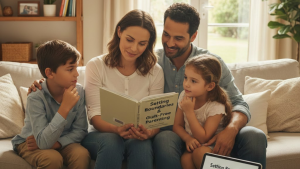
Learn how different parenting styles affect children’s social, emotional, and academic growth.
Parenting isn’t the same for every family. Different styles, like authoritative or permissive, affect how children grow, including their emotions, social skills, and school performance. (1)
Knowing these styles helps parents pick the best way to raise happy, strong kids.
Key Takeaways
- Authoritative Parenting leads to better social competence and emotional resilience.
- Authoritarian and Uninvolved Styles can harm self-esteem and social skills in children.
- The right balance of warmth, control, and involvement is crucial for positive developmental outcomes.
Overview of Parenting Styles
Parenting styles shape how we raise our kids, affecting discipline, communication, and emotional support. Every parent finds their own balance between love, rules, and independence.
Diana Baumrind first studied parenting styles in the 1960s and identified four main types. (2)
These styles help us understand how parents handle their children’s needs and discipline. Over time, researchers have added more styles, giving us a fuller picture.
Here are the key styles:
- Authoritative: A mix of warmth and rules. Parents are caring but firm, setting clear boundaries while encouraging independence.
- Authoritarian: Strict and controlling. Parents focus on obedience and rules, with little room for flexibility.
- Permissive: Lenient and indulgent. Parents give lots of affection but struggle with setting limits, letting kids have more freedom.
- Uninvolved (Neglectful): Minimal interaction or support. Parents focus on their own needs, often leaving kids to fend for themselves.
In addition to these, other parenting styles have emerged:
- Attachment Parenting: Focuses on building close emotional bonds with high responsiveness. Parents meet kids’ needs quickly, with practices like co-sleeping and breastfeeding on demand.
- Helicopter Parenting: Overprotective. Parents are always involved, preventing failure or disappointment, which can affect kids’ independence.
- Free-Range Parenting: Encourages kids to be independent. Parents allow exploration and trust their kids to make decisions, helping them develop resilience.
- Positive Parenting: Focuses on building a positive relationship with kids using praise and encouragement. Parents set clear limits without harsh punishment.
- Conscious Parenting: Parents are self-aware and focus on their own growth. They aim to understand their emotional triggers and respond thoughtfully to their children.
- Gentle Parenting: Emphasizes empathy and understanding. Parents focus on positive discipline and communication, helping kids understand their behaviors.
Each style can have different effects on a child’s emotional, social, and academic growth. There’s no one-size-fits-all—parents may mix styles depending on their values, their child’s needs, and their circumstances. The goal is to create a loving environment where kids feel safe and supported to grow.
Authoritative Parenting Style
Authoritative parenting is a balanced approach. Parents set clear rules but are also open to talking. They combine discipline with warmth, helping children make decisions while guiding them along the way.
Key traits include:
- Clear rules: Parents set boundaries but explain why they are important.
- Open communication: Parents listen to their children’s opinions.
- Warmth and support: Parents show love and care while maintaining expectations.
Children raised this way usually do well. They are:
- Emotionally strong: They handle problems and setbacks well.
- Successful in school: They understand the importance of working hard.
- Good with others: They know how to make and keep friends.
The balance of love and rules helps children become confident and responsible. Authoritative parenting works because parents communicate clearly and explain the reasons behind rules. This makes it easier for kids to understand and follow them.
Authoritarian Parenting Style
Authoritarian parenting is very strict. Parents set rigid rules and expect kids to obey without question. There’s little room for discussion, and the parents show less warmth or affection.
Key traits include:
- Strict control: Parents demand obedience and don’t allow much freedom.
- No room for discussion: Children must follow rules without asking why.
- Limited warmth: Parents are not very emotionally supportive.
While children might follow the rules well, they often face challenges:
- Low self-confidence: They may feel unsure of themselves.
- Poor social skills: They might struggle to make friends or relate to others.
- Fear of failure: They may become anxious about disappointing their parents.
Children in authoritarian homes may obey out of fear, not because they understand the reason behind the rules. This makes it hard for them to make their own decisions or handle life’s challenges without fear of punishment.
Permissive Parenting Style
Permissive parents act more like a “friend” than an authority figure. They don’t set many rules and let kids make their own choices.
- Struggle with authority: Without rules, kids don’t learn to follow instructions.
- Lack self-discipline: They don’t learn to finish tasks or take responsibility.
- Face social challenges: They might have trouble with frustrations or conflicts with others.
- Feel entitled: Without consequences, kids may feel they deserve whatever they want.
The main issue? Without clear rules or guidance, kids might not learn important life skills or how to handle problems.
Uninvolved (Neglectful) Parenting
Uninvolved, or neglectful, parenting is when parents are emotionally distant and not involved in their child’s life. These parents often don’t provide the care, support, or structure children need.
Key traits include:
- Emotional detachment: Parents are not connected to their children’s feelings or needs.
- Lack of support: Children are left to figure things out on their own.
- Preoccupation with their own needs: Parents are often focused on their own lives, not their child’s.
Children raised this way often face serious problems, such as:
- Poor academic performance: They may struggle in school because they lack guidance.
- Emotional issues: These children often deal with anxiety, depression, or low self-esteem.
- Relationship struggles: They find it hard to make friends or build healthy relationships.
The biggest harm comes from missing emotional support and life lessons. Without this guidance, children can’t develop essential skills, and they often feel isolated and unsupported. This can lead to bigger problems as they grow up.
Additional Parenting Styles

Attachment Parenting
Attachment parenting focuses on being very responsive to a child’s needs and keeping a strong emotional bond. Parents using this style make sure their child feels loved and secure by offering comfort and physical closeness right away.
Common practices include:
- Co-sleeping: Children sleep near parents for emotional closeness.
- Babywearing: Parents keep their child close in a carrier or sling.
- Breastfeeding on demand: Feeding whenever the baby is hungry, not on a schedule.
- High responsiveness: Quickly meeting the child’s emotional or physical needs.
This style builds strong emotional connections and can help kids feel safe and loved. Children often grow up with empathy and trust in their relationships.
However, critics argue that it can make it hard for kids to learn independence, as their needs are always met immediately. It can also be physically and emotionally demanding for parents.
In the end, attachment parenting works well for families that value emotional closeness, but it may not be the best fit for parents looking to encourage independence early on.
Helicopter Parenting
Helicopter parenting means being overly involved in a child’s life. These parents try to control everything, making decisions and protecting their children from failure or disappointment.
Key traits include:
- Over-involvement: Parents manage every part of the child’s day.
- Protection from failure: Parents stop children from facing the consequences of their actions.
- Excessive control: Parents make all decisions, limiting the child’s independence.
While it comes from a caring place, helicopter parenting can harm a child’s ability to make decisions and solve problems on their own. Children may struggle with stress, feel overly dependent on their parents, and lack resilience.
Outcomes often include:
- Lack of independence: Children find it hard to make decisions on their own.
- Difficulty handling stress: They struggle with coping when faced with challenges.
- Emotional dependence: They rely too much on parents for support.
Helicopter parenting can prevent children from developing important life skills. Giving kids space to make mistakes helps them grow stronger and more independent.
Free-Range Parenting
Free-range parenting focuses on giving children more freedom and independence. Parents who follow this style trust their kids to explore the world, make their own decisions, and learn from their experiences.
Key traits include:
- Independence: Children are given the freedom to make decisions and explore.
- Risk-taking: Children are encouraged to take safe, age-appropriate risks.
- Trust: Parents trust their children to solve problems on their own.
This style helps children become more self-sufficient, confident, and better at solving problems. However, it requires parents to trust their kids and create a safe environment for them to grow.
Outcomes often include:
- Self-reliance: Children become more independent and confident.
- Resilience: They learn problem-solving skills from handling challenges.
- Parental trust: Parents must be comfortable with less supervision.
Free-range parenting promotes independence but requires parents to carefully ensure their child has the skills to stay safe while exploring.
Positive Parenting
Positive parenting focuses on building a strong, respectful relationship with children. It uses encouragement and praise instead of punishment to teach good behavior.
Key traits and techniques include:
- Encouragement: Praising children for good behavior and effort.
- Modeling: Parents set a good example through their actions.
- Clear limits: Setting boundaries while showing support.
This style helps children become emotionally healthy, confident, and responsible. It strengthens the parent-child bond and helps kids understand the reasons behind rules and actions.
Outcomes often include:
- Well-adjusted children: Emotionally healthy and confident kids.
- Strong relationships: Positive parenting builds trust and respect.
- Better behavior: Kids learn to behave responsibly through positive reinforcement.
Positive parenting promotes emotional growth and helps kids thrive socially by focusing on support and encouragement.
Conscious Parenting
Conscious parenting is about being aware of your own feelings as a parent so you can respond to your child in a thoughtful way.
- Self-awareness: Parents notice their own feelings and reactions to avoid acting on habits.
- Being Present: Parents stay connected and make sure they meet their child’s needs.
- Empathy: Parents listen and understand their child’s feelings with care.
- Self-reflection: Parents take time to think about their emotions so they can be there for their child.
The goal is to help children grow up emotionally healthy, strong, and self-aware. Parents also work on improving themselves, which makes family relationships better.
Key Characteristics of Conscious Parenting:
- Self-awareness: Parents focus on their own emotional triggers and patterns.
- Empathy: Parents aim to understand the child’s perspective.
- Presence: Conscious parenting requires being fully present and emotionally available.
Outcomes:
- Emotional health: Children raised with conscious parenting are more emotionally resilient.
- Self-awareness: Parents and children both grow in their understanding of themselves.
- Respectful relationships: Conscious parenting fosters mutual respect and understanding between parents and children.
Conscious parenting can be transformative for both parents and children, as it encourages emotional growth and understanding. By being mindful of their own responses, parents can build a stronger, more emotionally healthy family dynamic.
Gentle Parenting
Gentle parenting is about being kind, respectful, and understanding with your child. Instead of punishing, it focuses on guiding kids in a positive way.
- Understanding: Parents try to figure out why their child is acting a certain way and help them calmly.
- Positive Discipline: Rather than punishment, parents use praise and gentle corrections.
- Teaching Good Behavior: It’s about helping kids learn how to behave, not just stopping bad actions.
- Patience and Consistency: Parents stay patient, stick to rules, and stay connected with their kids.
Children raised with gentle parenting become emotionally smart, kind, and good at solving problems. They also learn how to understand and manage their feelings.
Key Dimensions of Parenting Styles

Parenting styles are about more than just being strict or easygoing. They focus on key areas that affect how kids grow up:
- Warmth and Support: Kids need love and care to grow up feeling good about themselves. When parents show warmth, kids feel safe and learn to handle their emotions and relationships. Without warmth, kids might feel alone and have mental health issues.
- Behavioral Control: How parents enforce rules matters. Too few rules can lead to kids who don’t respect authority. Too many rules can cause stress and make kids too dependent. The best approach is finding a balance—clear rules that still allow kids to make choices.
- Parental Involvement: Being involved in your child’s life is important. When parents show interest in what their kids do and how they feel, kids learn important life skills like problem-solving and managing emotions.
These areas of parenting shape how kids develop socially, emotionally, and mentally.
Cultural and Socioeconomic Influence on Parenting Styles
Parenting styles are influenced by both culture and money. Here’s how:
- Cultural Influence: Different cultures have different expectations for children. For example, Chinese parents often focus on obedience, structure, and academics, which fits an authoritarian style. Other cultures might focus more on nurturing and communication, which fits an authoritative style.
- Socioeconomic Status (SES): Families with more money (higher SES) may have more resources to be flexible and loving with their children. Families with less money (lower SES) might experience more stress and use stricter or less involved parenting styles.
Cultural and financial factors shape how parents raise their kids, affecting how children grow up.
Practical Tips for Parents
For parents wanting to find the right balance, here’s how to do it:
- Be Consistent but Flexible: Set clear rules but let your child express themselves. Be firm but also warm, and give them room to make decisions.
- Focus on Emotional Support: Talk with your child, show affection, and offer help when needed. This boosts their confidence and emotional strength.
- Promote Independence: Let your child make decisions and solve problems. Don’t shield them from challenges; they need to learn from mistakes.
By using these tips, parents can create a supportive home where kids grow both independent and responsible.
FAQ
What are the different types of parenting styles?
The main types of parenting styles include the authoritative parenting style, authoritarian parenting style, permissive parenting, and uninvolved parenting. Authoritative parents are warm yet firm, while authoritarian parents focus on control and obedience.
Permissive parents, often indulgent, provide freedom but lack structure. Uninvolved parents, also called neglectful parents, show little emotional support or guidance.
These parenting approaches influence child outcomes, such as social competence, academic performance, and behavioral issues, with each style shaping the development of children in different ways.
How does authoritative parenting affect child development?
Authoritative parenting style is often seen as the most beneficial for child development. Authoritative parents set clear expectations but also encourage open communication and independence. This balanced approach helps promote positive outcomes like emotional health, academic performance, and social competence.
Research by developmental psychologists shows that children raised with an authoritative style are more likely to develop healthy relationships, emotional resilience, and good problem-solving skills. Parental warmth and consistent guidance create a positive emotional climate and foster better developmental outcomes.
What are the effects of authoritarian parenting on children?
Authoritarian parenting style, where control is emphasized over warmth, can lead to negative effects on children. Authoritarian parents focus on obedience and often use authoritarian tactics like punishment or scare tactics.
Children raised under authoritarian styles may struggle with self-esteem, social competence, and emotional health. These children often have difficulty with authority and may exhibit disruptive behavior or delinquent behavior.
The lack of nurturing parent-child relationships can also affect adolescent competence and mental health, leading to emotional difficulties and behavioral issues.
How does permissive parenting influence child behavior?
Permissive parenting, often characterized by indulgent parents, provides children with a lot of freedom but little structure or guidance. These parents are usually warm but avoid strict rules.
While children raised with permissive parenting might feel loved, they often struggle with expectations of maturity and self-discipline. Without clear boundaries, they might experience challenges in school, such as poor academic performance or behavioral issues.
The lack of parental control can lead to risky behaviors, emotional health struggles, and issues in social competence, as children may not learn self-regulation.
What are the consequences of neglectful parenting?
Neglectful parenting, also called uninvolved parenting, has significant consequences for children. Parents who are neglectful show little interest in their child’s emotional needs or development.
This lack of parental involvement can result in negative outcomes, such as poor academic performance, disruptive behavior, and emotional health issues. Children of neglectful parents often experience difficulties in forming healthy relationships and may engage in risky behaviors.
The absence of warmth and guidance negatively impacts child outcomes, leaving children more vulnerable to behavioral issues and emotional struggles.
What are the characteristics of permissive parenting?
Permissive parents are often indulgent and lenient, offering children a lot of freedom with few rules or guidelines.
They focus on being friends rather than authority figures, allowing their children to make decisions on their own. While permissive parenting might create a positive emotional climate, it can also lead to poor child outcomes.
Children raised by permissive parents may struggle with self-discipline, emotional health, and authority. The lack of parental control can contribute to behavioral issues, academic performance challenges, and social competence difficulties.
How does authoritative parenting affect parent-child relationships?
Authoritative parenting is about finding a balance between being loving and setting rules. These parents set clear expectations but also offer support and guidance. They encourage open talks, so kids feel comfortable sharing their thoughts.
This parenting style makes kids feel safe and loved. As a result, they have better mental health, make friends easily, and do well in school. The kindness and steady rules in authoritative families help kids grow in a good way.
How do different parenting styles affect academic performance?
Parenting styles can significantly impact a child’s academic performance. Authoritative parenting style, with its balance of structure and support, often leads to the best outcomes in school.
Children of authoritative parents typically perform better academically due to clear expectations and strong parental involvement. In contrast, permissive parents may struggle with ensuring academic focus due to a lack of boundaries.
Authoritarian parents are very strict, but being too controlling can stop kids from being creative or thinking for themselves, which can hurt their schoolwork. Neglectful parents, who don’t get involved, can have the worst effect on how well kids do in school.
What is the difference between authoritarian and authoritative parenting?
The main difference between authoritarian and authoritative parenting is how they balance control and warmth. Authoritarian parents are very strict and use punishment to make kids follow rules.
They aren’t as warm or supportive, which can cause problems like bad behavior. Authoritative parents also set rules but are kind and supportive too. They help kids make decisions and encourage independence. This style leads to better emotional health, social skills, and school success.
What are the effects of neglectful parenting on children?
Neglectful parents don’t offer much emotional support or guidance. They don’t supervise their kids or help with important decisions, which can lead to several problems.
Kids of neglectful parents often have trouble with behavior, struggle in school, and face emotional health issues. They may also feel bad about themselves and have trouble building strong relationships. Without the right support, they find it harder to meet expectations and grow into responsible, well-adjusted adults.
Conclusion
Parenting styles greatly impact a child’s growth. There’s no perfect way to parent, but a good mix of love, rules, and freedom usually works best.
When parents understand different styles and adjust how they guide their kids, they can help them grow emotionally, socially, and academically.
The most important thing is giving steady support, guidance, and love.
References
- https://www.ncbi.nlm.nih.gov/books/NBK568743/
- https://en.wikipedia.org/wiki/Diana_Baumrind